51st Toronto International Film Festival - 2026
Reviews are divided based on categories as per the festival.

Centrepiece
The City of the Living
⭐️⭐️⭐️⭐️
Four Seasons in Java
⭐️⭐️⭐️⭐️⭐️
Our Loves
⭐️⭐️⭐️⭐️
The Violinist
⭐️⭐️⭐️⭐️⭐️
Wavelengths
Once Upon a Time in Harlem
⭐️⭐️⭐️⭐️⭐️
Arrested Memory
⭐️⭐️⭐️
Brace Your Heart
⭐️⭐️⭐️⭐️
Platform
Midnight Madness
Discovery

Head to Head
⭐️⭐️⭐️⭐️
Stuffed
⭐️⭐️⭐️
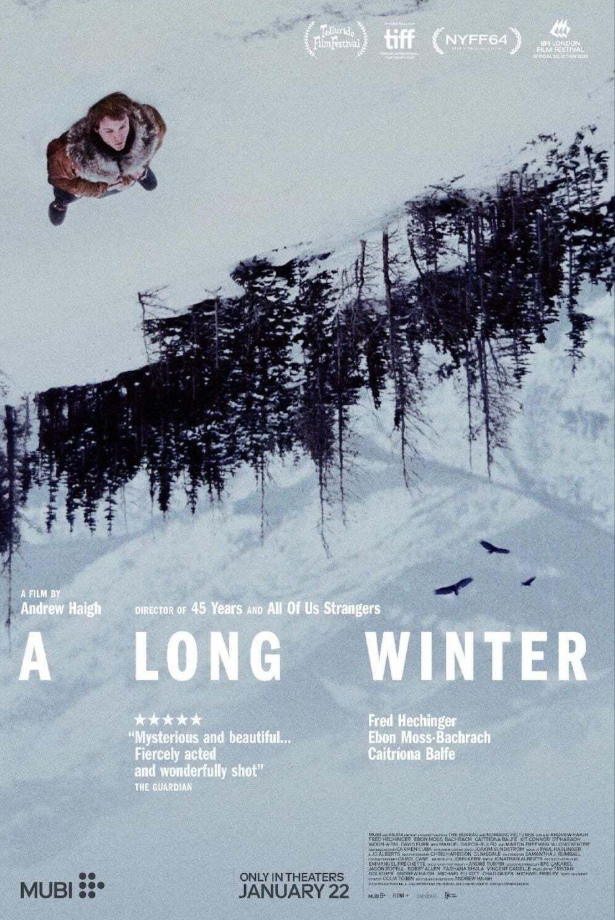
A Long Winter
⭐️⭐️⭐️⭐️
Feature Film (Narrative)
Film Production Companies: MUBI, Film4, Nomadic Pictures and The Bureau
Rating: NR / Run Time: 117 minutes
Language: English
Director: Andrew Haigh
Writer: Andrew Haigh based on the novella by Colm Tóibín
Starring: Freed Hechinger, Ebon Moss-Bachrach, Caitríona Balfe, Kit Connor,
D’Pharaoh Woon-A-Tai and Martin Freeman
“Turns out loving somebody isn’t enough.”
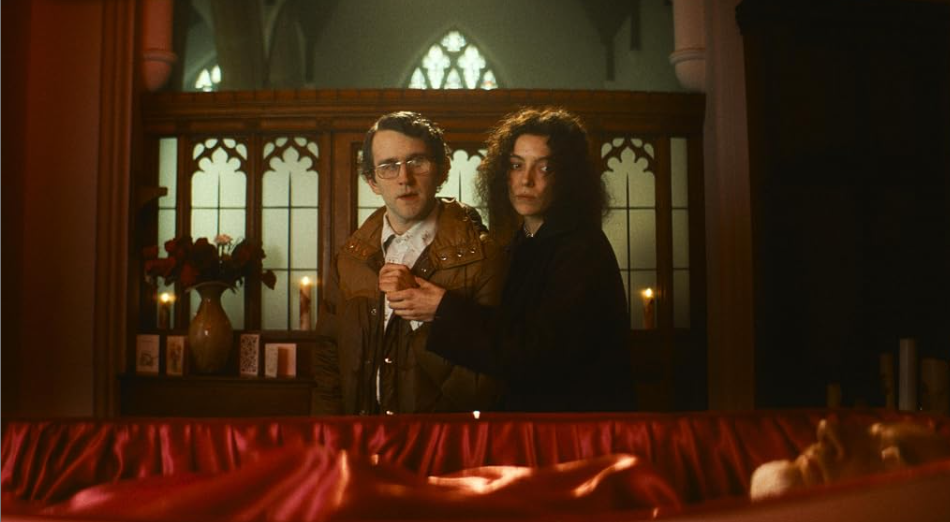
In 1951, Mike (Hechinger) lives with his parents, Louise (Balfe) and Lester (Moss-Bachrach), and his younger brother Tommy (Connor) in the mountains of Colorado. Tommy has left to serve in the Korean War, while Mike remains behind in a small community where businesses are closing and opportunities seem increasingly limited. Mike is quieter and more reflective than his brother, and while he seems content with the life his family has built, his mother clearly isn't. Louise makes occasional trips into town for alcohol and magazines, but it becomes apparent that what she really wants is something beyond the isolated life Lester has created for their family. Then Louise disappears.
After leaving the house with the family dog, Sandy, Louise doesn't return, and the arrival of a brutal winter makes the search increasingly difficult. Neighbors join the effort, but as the days turn into weeks and then months, the possibility of finding her becomes more uncertain. Mike, however, refuses to stop looking. Even as his father tries to keep the family and their property functioning, Mike continues venturing into the wilderness, convinced that his mother is still out there somewhere.
Lester eventually brings Jimmy (Woon-A-Tai), an orphan, into the household to help with the work Mike has been neglecting. What begins as a practical arrangement gradually becomes something much more meaningful. Mike and Jimmy develop a friendship, and Jimmy eventually joins Mike on his searches for Louise. As they spend more time together, Mike begins to recognize feelings and possibilities about himself that he hadn't previously considered. His mother's disappearance becomes more than a search for someone he loves; it becomes the event that forces him to look at the life he has been living and consider what he might want for himself.
What makes A Long Winter work is the way Andrew Haigh allows those realizations to unfold gradually. This isn't a film that needs to announce every emotional revelation the moment it happens. Mike is figuring things out as we are, and Haigh gives the relationship between Mike and Jimmy enough space to develop naturally. There is also something compelling about the contrast between Mike and Tommy. Tommy has physically left this isolated world in search of something different, while Mike initially seems perfectly willing to remain. Louise wants an escape, Lester believes he gave his family exactly what they needed, and Mike finds himself somewhere between those competing ideas of what a life should be.
The setting is stunning, with the Colorado landscape offering an almost idyllic picture of family life even as the unhappiness underneath it becomes increasingly apparent. The mountains, snow and vast stretches of wilderness make the family feel both protected and trapped. Perry Como's “A Dreamer's Holiday” is also used beautifully, taking on an almost bittersweet quality as it underscores Mike's growing awareness of the life beyond the one he has always known.
Hechinger gives Mike a wonderful combination of innocence and determination. There is something immediately endearing about the way he refuses to give up on his mother, even when everyone around him begins to accept that she may never return. Moss-Bachrach is equally effective as Lester, bringing a stoic tension to the character that keeps us wondering how far his frustration and grief might take him. He never pushes Lester into becoming something simpler than the complicated man he is.
And while A Long Winter is certainly a family drama and a coming-of-age story, it is also a story about survival and the risks involved in discovering what we actually want. Sometimes the life we are given isn't the life we would have chosen, and sometimes pursuing something different can have consequences for the people we love. But Haigh doesn't suggest that wanting something more is necessarily selfish or destructive. Sometimes the risk of changing your life may be worth taking.
What I appreciate about Haigh's filmmaking is his willingness to let a quiet, contemplative story unfold without rushing his characters toward an answer. Like All of Us Strangers, this is a film that trusts its characters and its audience enough to sit with uncertainty rather than rushing toward an answer. All in all, A Long Winter is a beautifully observed story about family, identity and the courage it takes to imagine a life beyond the one you were given.
Review by Cinephile Mike
Arrested Memory
⭐️⭐️⭐️
Feature Film (Narrative)
Film Production Companies: LHB Films, Lucky Number, Chunghwa Telecom
Rating: NR / Run Time: 87 minutes
Language: Mandarin, Min Nan and Japanese with English subtitles
Director: SABU
Writer: SABU
Starring: Ethan Juan, Hsieh Ying Xuan, Moon Lee, Shinchi Tsutsumi and
Reika Kirishima
“My mind’s been bad lately.”
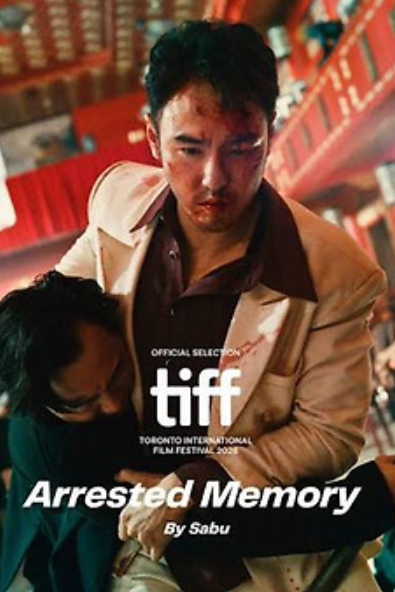
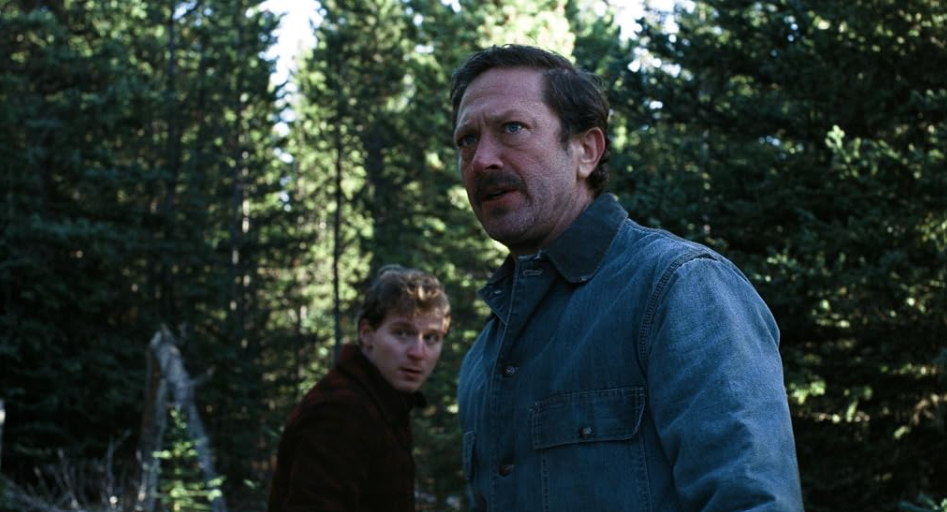
Captain Lee (Juan) is a respected police captain whose memory is beginning to fail him. He knows something is wrong but refuses to admit it, even as the lapses become harder to hide. During a drug bust, one of those episodes has devastating consequences, leaving Lee to deal with the loss of his entire team. Before he has much time to process what happened, he is pulled into another case: the kidnapping of the five-year-old son of a wealthy Japanese businessman, with a $30 million ransom demanded for his return.
Lee is determined to get the boy back, but his memory keeps working against him. He agrees to pose as the boy's father and take the ransom to the kidnappers, only to lose track of where he is going and, at times, why he is carrying the money in the first place. As the case unfolds, the kidnapping and the drug bust that cost Lee his team become increasingly connected, while the people around him—including the police, criminals and a desperate young woman named Hua (Lee)—become part of a situation that Lee is struggling to understand himself.
What initially feels like it could be a straight action thriller gradually reveals itself to be something much sillier. Arrested Memory seems to spend the first part of its runtime deciding whether it wants to be an action film, a crime thriller or a comedy, but eventually the mash-up becomes part of its charm. This isn't really an action comedy in the traditional sense; there is something closer to a Three Stooges sensibility running through the action, particularly as the various characters become increasingly tangled in situations they don't fully understand.
That approach doesn't always work. There are a lot of coincidences and convenient turns that have to fall into place to connect all of the different characters and plot threads. Some of the supporting characters also feel as though they disappear for stretches before suddenly becoming important again. But once I stopped trying to make everything make perfect sense, I found myself having more fun with what SABU was doing. The film is knowingly chaotic, and Lee's inability to keep track of what is happening makes him an amusingly unreliable center for all of this madness.
Ethan Juan is a big reason it works as well as it does. He handles Lee's physicality particularly well, moving from martial-arts action to physical comedy without losing the character's sense of bewilderment. There are moments when Lee is completely capable of taking down the people coming after him, only to have no idea why they are chasing him in the first place. Juan makes that contradiction entertaining while also giving Lee enough humanity that his memory loss doesn't simply become a running gag.
Jai Ip's cinematography adds plenty of energy, particularly during the action sequences, where the use of slow motion allows us to take in the choreography and the increasingly ridiculous situations Lee finds himself in. Junichi Matsumoto's score is equally playful, becoming a terrific companion to some of the film's more outrageous moments. Together, the visuals and music help establish the slightly off-kilter tone that SABU is going for.
There is a more serious story underneath all of this about a man dealing with trauma and losing his ability to trust his own memory, and occasionally the film hints at how affecting that could have been. But Arrested Memory is ultimately more successful when it embraces its absurdity rather than asking us to sit with the drama for too long. All in all, Arrested Memory may not always make perfect sense, but once it embraces its strange blend of action, physical comedy and chaos, it becomes a surprisingly fun ride.
Review by Cinephile Mike
Brace Your Heart
⭐️⭐️⭐️⭐️
Feature Film (Narrative)
Film Production Companies: Compass Films, Film i Väst, Filmpool Nord,
Forest People, Invictus and Nordisk Film Production Sverige
Rating: NR / Run Time: 97 minutes
Language: Saami and Swedish with English subtitles
Director: Amanda Kernall
Writer: Amanda Kernall
Starring: Elli Sara Valkeapää, Andte Gaup-Juuso, Vincent Niia,
Anni-Kristiina Juuso and Nils Peder Gaup
“What if you miss the chance to let the right person into your life?”
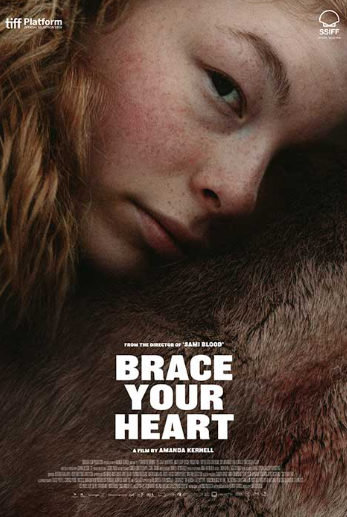
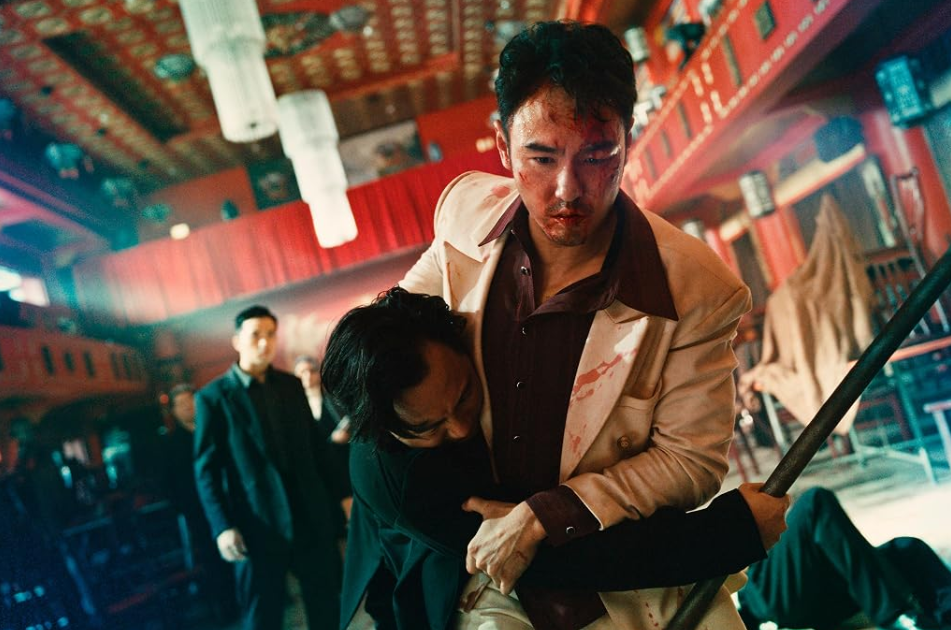
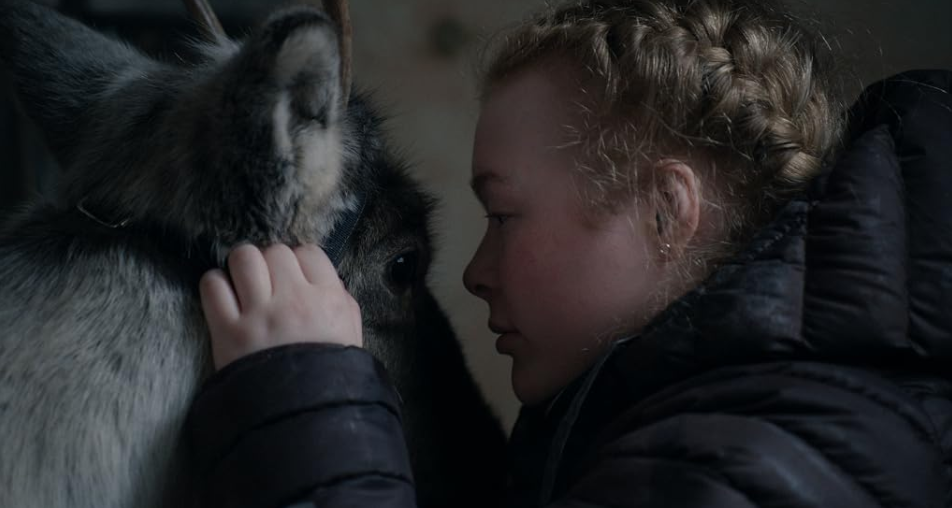
When Ejva’s (Valkeapää) father dies, she is suddenly faced with a responsibility that is much bigger than simply taking over the family’s reindeer herd. At just 20 years old, she has to prove herself to a team that isn't sure she is ready for the job, while also figuring out what kind of life she wants for herself. Her first attempts don't exactly go smoothly. She misses a closing gate, sending hundreds of reindeer across the border into Norway, and later nearly drowns when a snowmobile crashes through the ice while she is guiding the herd. But after Nejla, a new member of the team and the cousin of team leader Heaika, saves her, Ejva's life begins to change in ways she couldn't have expected.
Heaika has feelings for Ejva and seems to believe that being the leader of the team gives him some claim over her future. Nejla (Niia), meanwhile, brings out something very different in her. Their connection develops naturally, creating a tension that becomes increasingly difficult for Ejva to navigate. What begins as a story about a young woman trying to prove herself within her family's traditional way of life gradually becomes something much more personal: a battle between what is expected of her, what others believe is right for her, and what she actually wants.
That conflict becomes even more complicated when Heaika sexually assaults Ejva. The film doesn't treat the moment as something that simply happens and then disappears from the story. Its consequences stay with her, affecting the way she moves through the world and even physically manifesting in the tremors in her hands. When she turns to the elder Joavnna (Gaup) for help, the film begins to explore not only what happened to Ejva, but what it means to try to live with something that the people around you may not fully understand.
The expansive landscape also works beautifully with what Ejva is going through. There is so much open space around her, yet she is constantly being pulled in different directions by her family, her community and her own feelings. The more she tries to figure out what she wants, the more that wide-open world seems to reflect just how difficult it is for her to find her place in it.
Elli Sara Valkeapää gives Ejva a powerful, grounded presence. She doesn't need to constantly announce what Ejva is feeling; much of the performance comes through her determination and the way she carries herself. That restraint makes the moments when her emotions break through even more affecting. Andte Gaup-Juuso is equally effective as Heaika, particularly because of the rapport he establishes with Ejva before their relationship takes such a dark turn. His relationship with Ejva feels completely different from the connection she develops with Vincent Niia's Nejla, which makes Ejva's emotional conflict feel genuine rather than simply a matter of choosing between two people.
There is also something particularly effective about the way the film moves through the seasons. Ejva's relationship with the herd, her family and herself is constantly changing, and the shifting landscape reflects those changes. What initially feels like an expansive opportunity gradually becomes something more complicated as Ejva realizes that staying with the herd may require her to sacrifice parts of herself. Her eventual decisions aren't simply about leaving or staying; they are about whether she can build a life on her own terms, even when doing so has consequences for the people she loves.
What I appreciated most about Brace Your Heart is that it doesn't make Ejva's journey as simple as right versus wrong. She is caught between responsibility and desire, family and independence, tradition and the possibility of something different. Even forgiveness becomes complicated when it is presented as part of the price of being welcomed back into the community. The film understands that sometimes the hardest choice isn't knowing what other people think you should do, but accepting that what is right for everyone else may not be what is right for you. All in all, Brace Your Heart is a powerful story about the inner conflicts that arise when family, community and tradition collide with what your own heart wants.
Review by Cinephile Mike
Bucking Fastard
⭐️⭐️
Feature Film (Narrative)
Film Production Companies: Providence Road Entertainment and
Gateway to Orkney
Rating: NR / Run Time: 109 minutes
Language: English
Director: Werner Herzog
Writer: Werner Herzog
Starring: Kate Mara, Rooney Mara, Orlando Bloom, John Kavanagh,
Marion O’Dwyer, Brendan Conroy and Domhnall Gleeson
“Is it a crime to love?”
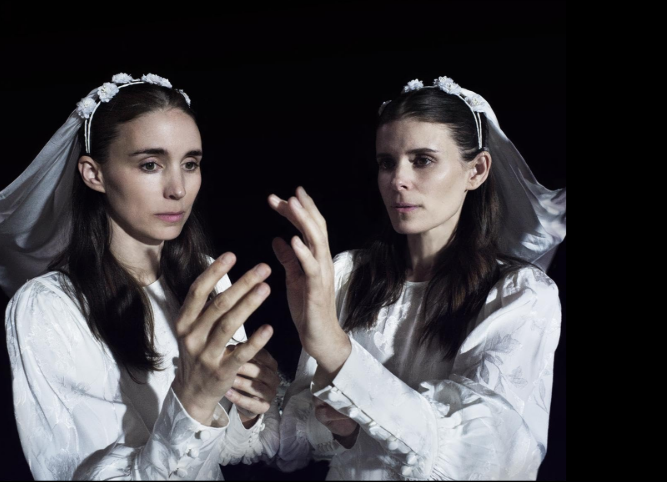
Jean (Kate Mara) and Joan (Rooney Mara) Holbrooke are sisters unlike almost anyone you've seen on screen. They speak in unison, move in unison and seem to experience the world almost as a single person. We first meet them sitting together on the witness stand, facing legal consequences for their behavior toward Gareth Mulroney (Bloom), a man they had both fallen in love with. When Gareth begins seeing another woman, the sisters don't exactly take the rejection well, eventually leading to a restraining order and a very unusual courtroom proceeding.
There is something immediately fascinating about the sisters, and the opening of Bucking Fastard made me think I might be in for something genuinely strange and compelling. The Mara sisters' synchronized performance is remarkable without feeling like a simple gimmick. Their identical rhythms and shared reactions establish just how dependent Jean and Joan are on one another, while the courtroom setting gives us a glimpse into what happens when a relationship this insular collides with the outside world.
After the trial, however, the film begins moving from one strange episode to another without ever giving those episodes enough weight. Jean and Joan are given a place to stay by the kindly Mr. Westmoreland (Kavanagh), and they become friendly with their neighbor Timothy (Gleeson). They begin imagining another romantic future for themselves, but circumstances eventually send them away from the city and into the countryside to live with their Auntie Louise (O’Dwyer) where they meet an elderly sheep farmer named McFarland (Conroy). He tells them stories about the caves in the mountains, and before long, the sisters become convinced that one of these caves could lead them to Orkney.
This is where I began to feel increasingly disconnected from the film. Characters come and go, storylines are introduced and then largely abandoned, and the sisters seem to move from one exploit to another without a clear emotional progression connecting them. Just when I would begin to become interested in one aspect of their story, Bucking Fastard would take another sharp turn. By the time Jean and Joan are digging their way through the mountain, I found myself wondering less about where they were going and more about how we had gotten there.
The cave sequences are visually impressive, and Herzog certainly creates a strange atmosphere around the sisters' increasingly obsessive quest. The production design gives the film a dreamlike quality, and there were moments when I couldn't help but think of Werner Herzog's fascination with the natural world and the strange places people venture into. But the imagery alone couldn't make me emotionally invest in where the story was heading. The more surreal the film became, the more I felt that I was watching Herzog explore an idea rather than watching these characters actually develop.
That is particularly frustrating because the Mara sisters are so good. Their performances are deliberately restrained for much of the film, with the synchronized speech and movement creating a fascinating sense of codependence, but they also find moments when the emotions underneath finally break through. They deserved a movie that gave them more to work with. Orlando Bloom is intriguing in the opening section as Gareth, and there are other recognizable performers who appear along the way, but several of those characters feel as though they are introduced simply to move the sisters toward the next episode.
There are certainly moments of Herzog's eccentricity that I enjoyed, and I can understand why the film's bizarre premise will work for some viewers. But for me, the opening courtroom sequence suggested a movie that could have explored the sisters' unusual relationship, their dependence on one another and the consequences of living so completely inside their own world. Instead, the film gradually becomes a much more abstract journey, and I found myself losing interest as it moved farther away from the characters who initially drew me in. All in all, Bucking Fastard has a fascinating premise and two terrific central performances, but the film never finds a story worthy of what the Mara sisters bring to it.
Review by Cinephile Mike
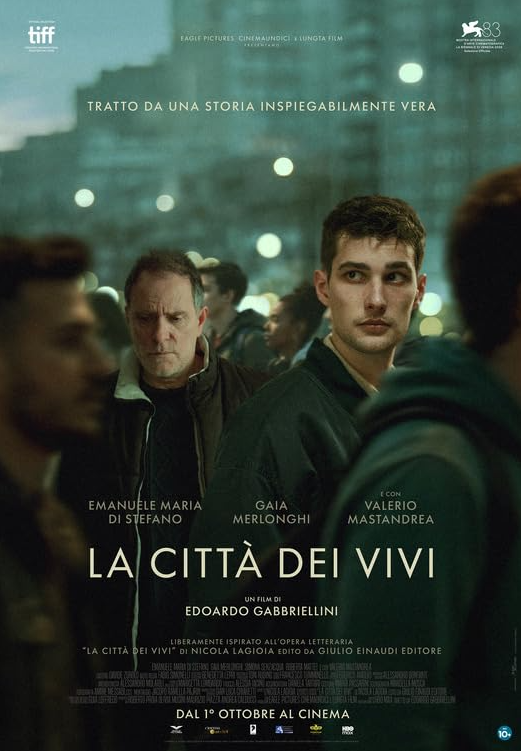
The City of the Living
⭐️⭐️⭐️⭐️
Feature Film (Narrative)
Film Production Companies: Eagle Pictures, Cinemaundici and Lungta Film
Rating: NR / Run Time: 103 minutes
Language: Italian with English subtitles
Director: Edoardo Gabbriellini
Writer: Nicola Lagioia
Starring: Emanuele Maria Di Stefano, Gaia Merlonghi, Simona Senzacqua,
Roberta Mattei, Simone Tibaldi, Andrea Isidori, Michele Valerio Legrottaglie,
Giorgio Montaldo, Giacomo Colavito and Valerio Mastandrea
“We have come for your son.”
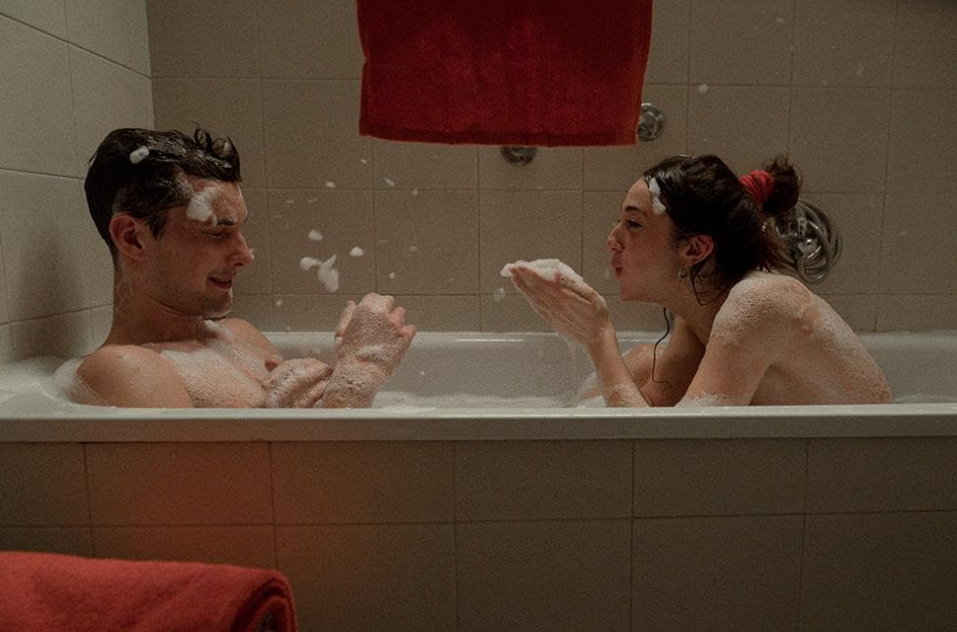
Luca Varani (Di Stefano) is 23 years old, living at home with his loving adoptive parents and trying to figure out what comes next. He works alongside his father at a carnival game booth, has dropped out of school but is trying to finish his degree at night, and dreams of marrying his girlfriend Marta and getting a place of their own. But Luca is frustrated by where he is in life. He wants to be able to provide for Marta and give them a better life, and that desire sometimes gets the better of him. He can be embarrassed by the restaurants he can afford, reluctant to introduce Marta to some of his friends and quick to make an impulsive decision that he regrets almost immediately.
When his friend Filippo (Tibaldi) helps him find a better-paying job painting cars at an auto shop, it seems like Luca may finally be moving forward. But a chance encounter with Andreas (Isidori), a male escort who offers him a way to make extra money, opens the door to a secret second life. Luca begins taking jobs as a sex worker while continuing to work at the auto shop, telling no one in his life what he is doing. One of those encounters brings him into the world of Marco (Legrottaglie), a wealthy gay man whose apartment is filled with parties, drugs and drag performers. Luca isn't necessarily comfortable in that world, but the money is appealing, and he keeps returning.
I went into The City of the Living knowing very little about the real-life case behind it, which made the film's final act especially shocking. I think that is worth preserving for anyone who doesn't know the story, because the film doesn't spend its first two hours telling you that you are watching a true-crime tragedy waiting to happen. Instead, it allows Luca to simply be a young man trying to figure out his life. He can be loving, frustrated, impulsive and sometimes difficult, but he never feels like a character who exists only because something terrible is going to happen to him.
That is what I appreciated most about Edoardo Gabbriellini's approach. Even though the film is based on a notorious crime, it doesn't turn Luca's fate into an excuse for graphic violence or sensationalism. We don't watch the crime unfold in explicit detail. The film suggests what happens and then moves on, allowing the horror to register without making us spectators to it. Instead, Gabbriellini is far more interested in the person Luca was before he became a name associated with a crime. The result feels much more like a character study than a traditional true-crime film.
Emanuele Maria Di Stefano is excellent in the role, carrying much of the film with the angst of a young man who knows he wants more from life but isn't quite sure how to get there. There is something very believable about Luca's contradictions. He wants to make his parents proud, he wants to give Marta more, he wants to fit into a world that sometimes makes him feel like he doesn't belong, and he makes choices that don't always move him in the direction he wants to go. Di Stefano makes all of those sides of Luca feel like they belong to the same person.
I also appreciated that, at least from my perspective, the film never treats Luca's encounters with LGBTQ characters as the reason his life takes the turn it does. The parties, the sex work and the drugs are part of the world he enters, but the film doesn't suggest that these things are inherently responsible for what happens to him. Amine Messadi's cinematography has an almost observational quality, which adds to the feeling that we're watching Luca's life unfold rather than being told how we're supposed to feel about it.
The one place where I wanted a little more was after Luca's incident. The film does check in on some of those in Luca’s life, and those moments are important because they remind us that his story extends beyond what happens to him. But I found myself wishing we had spent more time with the people affected by the events that follow and with how their lives are changed. After spending so much time getting to know Luca as a person, I wanted just a little more space to see what comes next. All in all, The City of the Living is a thoughtful and often heartbreaking portrait of a young man searching for his place in the world.
Review by Cinephile Mike
Coward
⭐️⭐️⭐️⭐️
Feature Film (Narrative)
Film Production Companies: The Reunion, Lumen, Topkapi Films, Versus Production,
France 2 Cinéma, VTM, Radio Télévision Belge Francophone, Proximus, BeTV
and Orange Belgium
Rating: NR / Run Time: 120 minutes
Language: French and Dutch with English subtitles
Director: Lukas Dhont
Writer(s): Lukas Dhont and Angelo Tijssens
Starring: Emmanuel Macchia, Valentin Campagne, Jef Jacobs, Willem De Schryver,
Liam Jacqmin, Mistral Guidotti, Mathieu Carpentier, Jonas Wertz and Boris Bouchat
“In the real world we can’t have moments like this.”
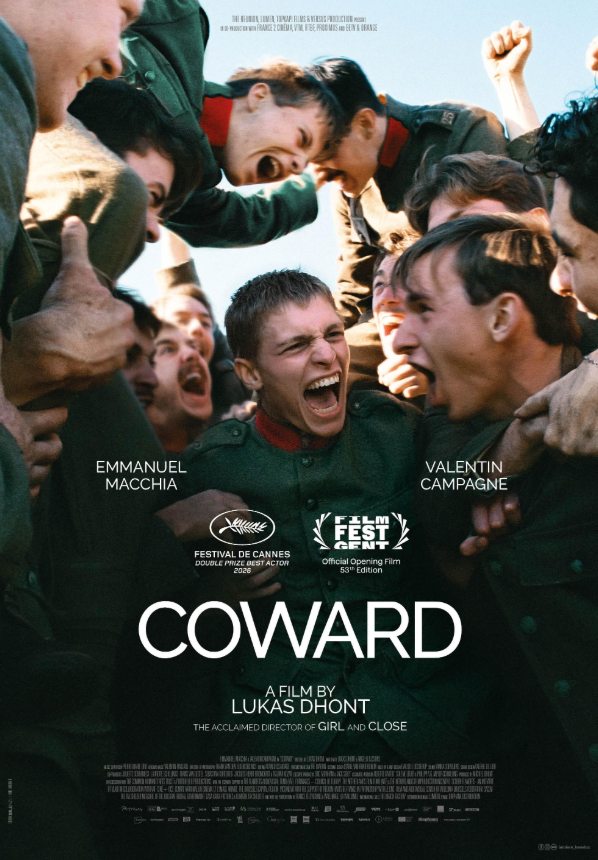
Set during World War I, Lukas Dhont’s Coward follows Pierre (Macchia), a quiet young Belgian soldier who finds himself moving between the various jobs required of soldiers away from the front lines, from transporting supplies to helping recover the bodies of those killed in battle. While helping construct a stage for a troupe preparing to entertain the troops, Pierre meets Francis (Valentin Campagne), an openly effeminate soldier who directs the performances and, before the war, worked as a tailor in his family’s shop. Pierre is immediately drawn to Francis, whose confidence and comfort in his own skin stand in stark contrast to Pierre’s more reserved nature.
As Pierre becomes more involved with the troupe, he discovers an unexpected outlet from the realities of war. He begins painting the backdrops and eventually joins the performers himself, traveling with Francis and the other soldiers as they put on variety shows, sometimes performing in drag. Dhont uses these performances to create an effective contrast with the horrors surrounding them. One moment, the soldiers are singing, laughing and sharing a meal; the next, Pierre and his comrades are collecting corpses from a battlefield. The abrupt transitions capture the unpredictable nature of war while showing how these brief moments of entertainment can provide an escape from it.
That contrast also extends to the soldiers themselves. Jacobs (De Schryver), one of Pierre's comrades, has recently become a father but has yet to meet his child, and his growing despair reflects the uncertainty of whether the war will ever end. Stevens (Jacobs) is also part of Pierre's group, and after an attack leaves one of their comrades dead, the emotional toll of the war becomes increasingly difficult for all of them to ignore. Pierre's own attempt to escape direct battlefield duty by deliberately cutting himself initially seems like a way to get closer to the troupe, but that decision eventually comes back to haunt him.
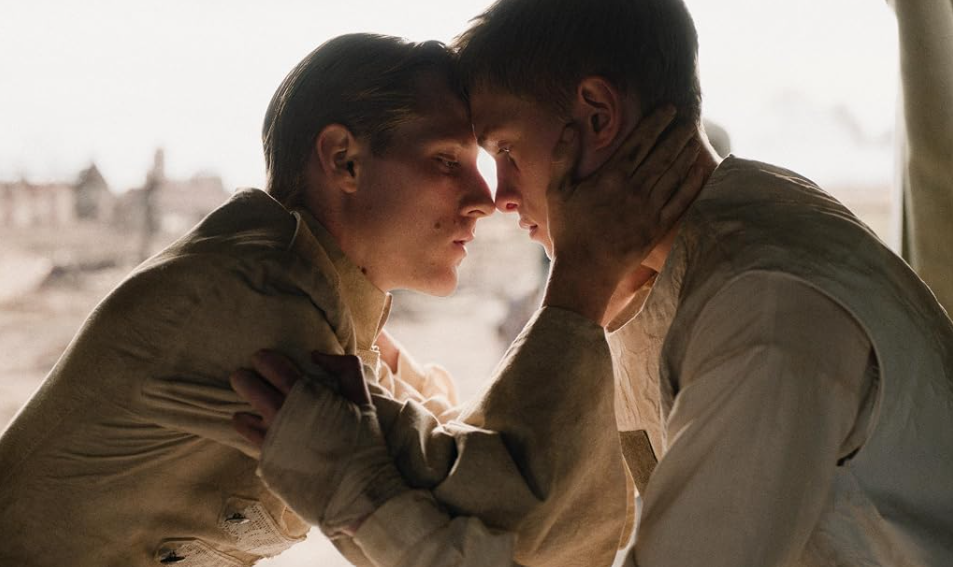
Meanwhile, Pierre and Francis's relationship slowly develops into something more intimate. After sharing a night together while on tour, the two begin to imagine what a life together might look like beyond the war. Yet they don't share the same vision of what the end of the war means. Pierre wants the fighting to stop so they can build a life together, while Francis sees the war as providing a strange form of protection from the societal expectations that would confront them afterward. For Francis, returning home means returning to a world where being with Pierre would no longer be so simple.
That reversal is one of the film's most compelling ideas. We might expect the more flamboyant Francis to be desperate to escape the restrictions of military life, while the quieter, more conventionally masculine Pierre would be reluctant to leave it behind. Instead, Coward complicates those expectations, using the war to temporarily create a space where Francis can be the person he wants to be. The film never needs to turn their relationship into a constant exercise in wondering whether they will be discovered, though that threat exists; instead, the greater threat becomes what happens when the war ends and the world they have created together disappears.
Macchia and Campagne are both excellent, with Campagne crafting Francis as a larger-than-life performer while maintaining the vulnerability beneath his confidence. Macchia is equally effective as the more stoic Pierre, allowing the character's emotions to emerge gradually so that when the story delivers its gut punches, we feel them alongside him. Their chemistry is particularly powerful, recalling some of the emotional connection between Heath Ledger and Jake Gyllenhaal in Brokeback Mountain without simply replicating that film's story. The sparse, predominantly string-based score by composer Valentin Hadjadj is another effective choice, while the musical performances, captured by cinematographer Frank van den Eeden, give the film moments of genuine joy amid its darker subject matter, also quite viscerally captured.
The title Coward ultimately carries multiple meanings, which makes it especially fitting. It can speak to Pierre's attempts to avoid the battlefield, to the fear surrounding their relationship, and perhaps to the choices people make when survival requires them to hide who they are. I did find myself wishing Dhont had gone deeper into the taboo surrounding Pierre and Francis's relationship, particularly given how powerfully he explored similar ideas of social pressure and isolation in Close. Still, the film's willingness to subvert expectations gives this familiar wartime-romance framework a fresh dimension. All in all, Coward is a beautifully acted and emotionally resonant story about two men who find a rare sense of freedom in one another, even as the end of the war threatens to take that freedom away.
Review by Cinephile Mike
Fjord
⭐️⭐️⭐️⭐️
Feature Film (Narrative)
Film Production Companies: Mobra Films, Why Not Productions, Eye Eye Pictures,
Snowglobe Films, Aamu Filmcompany and Filmgate Films
Rating: NR / Run Time: 146 minutes
Language: English, Romanian, Norwegian and Swedish with English subtitles
Director: Cristian Mungiu
Writer: Cristian Mungiu
Starring: Sebastian Stan, Renate Reinsve, Lisa Carlehed, Ellen Dorrit Petersen,
Lisa Loven Kongsli, Henrikke Lund-Olsen, Vanessa Ceban, Jonathan Ciprian Breazu,
Teodora Sabina Barau, Filip Sebastian Barau, Øyvind Venstad Kjeksrud and Markus Scarth Tønseth
“I believe we all have a lot to learn from everything that’s happened.”
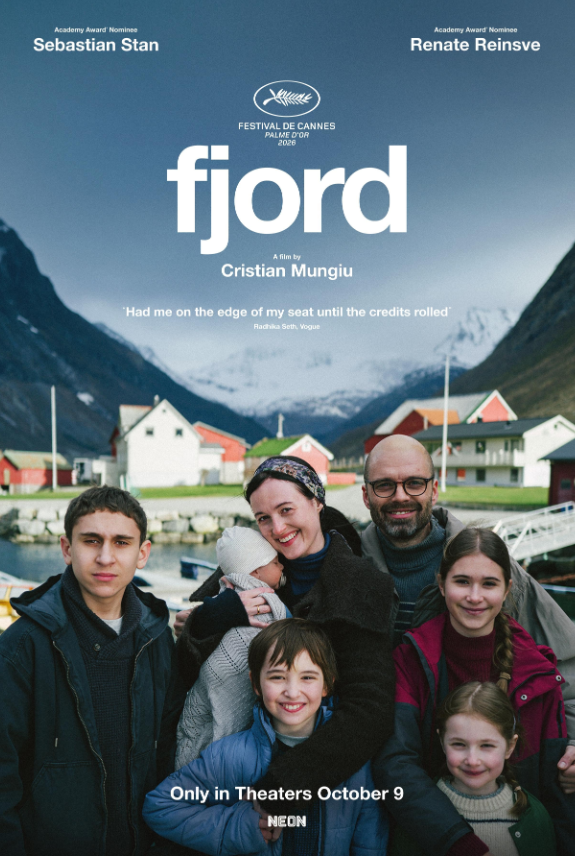
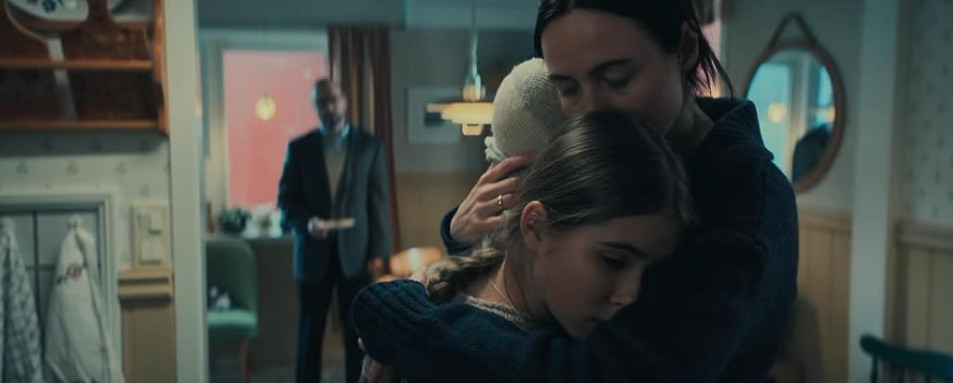
Mihai (Stan) and Lisbet (Reinsve) have recently moved their family from Romania to Norway, bringing their five children with them in the hope of building a better life. Mihai, an aeronautical engineer who is now working in IT, and Lisbet, who works in a nursing home, are deeply religious and raise their children according to strict Christian beliefs. They don't allow phones, music or other modern distractions in the home, instead centering their family life around their faith. Their new beginning seems promising at first, particularly when they become neighbors with Mats (Tønseth), the headmaster of their children's school, and his family.
But it isn't long before the Gheorghiu family's way of life begins to draw attention. When their daughter Judith (Barau) tells another student she is going to hell after the girl reveals she is a lesbian, the school becomes concerned. Then bruises are discovered on Elia (Ceban), and questions about what is happening inside the Gheorghiu home quickly escalate. Before Mihai and Lisbet fully understand what is happening, their children are removed from their care while authorities investigate possible abuse.
What makes Fjord so compelling is that the more we learn, the harder it becomes to decide exactly what we should think about this family. There are things Mihai and Lisbet do that are understandably concerning, but we also see a family whose religious and cultural practices are being viewed through a completely different set of expectations in Norway. They aren't presented as perfect parents, and there are moments when I found myself questioning their choices, but the film also makes us question whether the authorities fully understand the family they're dealing with. As the investigation moves toward hearings and a criminal trial, Mungiu keeps adding pieces to the story that made me reconsider where I stood.
The cultural divide becomes increasingly important as the case grows. Mihai and Lisbet are trying to explain practices that they see as part of raising their children within their faith, while the Norwegian authorities are looking at those same actions through the lens of child protection. As religious leaders and members of the community rally around the family, the situation becomes even more complicated. What began as a question about one family becomes a much larger conversation about parenting, religion, cultural differences and how much authority institutions should have inside someone's home.
Stan and Reinsve give powerhouse performances precisely because neither plays their character in an overly demonstrative way. They are two parents trying to hold their family together while everything around them seems to be falling apart. There is also an interesting chemistry between them, which makes their relationship believable even as we occasionally find ourselves questioning what might be happening behind their reserved public demeanor. Having previously appeared together in A Different Man, they have a rapport that makes it easy to invest in them as a couple while still allowing the film to keep us questioning them.
Tudor Vladimir Panduru’s cinematography is beautiful, with sweeping shots of the Norwegian countryside that emphasize just how isolated the family can feel. The massive mountain looming over the town becomes particularly effective, especially as the threat of an avalanche hangs over the community. There is something fitting about having this enormous force of nature sitting above the characters while their own lives are approaching a tipping point. The landscape is gorgeous, but there is always something ominous about it.
Mungiu also raises some interesting questions about the role schools and authorities should play when they believe a child may be in danger. At times, the film can feel heavy-handed, particularly when it seems to lean toward one side of the argument, but then another piece of information emerges and suddenly we're questioning that conclusion. What is a school's responsibility when it believes a child may be in danger? Where is the line between parenting and harm? And how much should cultural and religious differences factor into those decisions? Fjord doesn't give us easy answers, and I think the film is more interesting because it leaves us wrestling with those questions after the credits.
The nearly two-and-a-half-hour runtime gives Mungiu plenty of time to let the situation become increasingly complicated rather than rushing toward an easy conclusion. Even as the legal proceedings move forward, Fjord remains less interested in telling us who is right than in showing how quickly we can become convinced that we know the answer. All in all, Fjord is a challenging and thought-provoking drama that raises difficult questions without telling us what to think, leaving us to wrestle with what we've seen long after the credits roll.
Review by Cinephile Mike
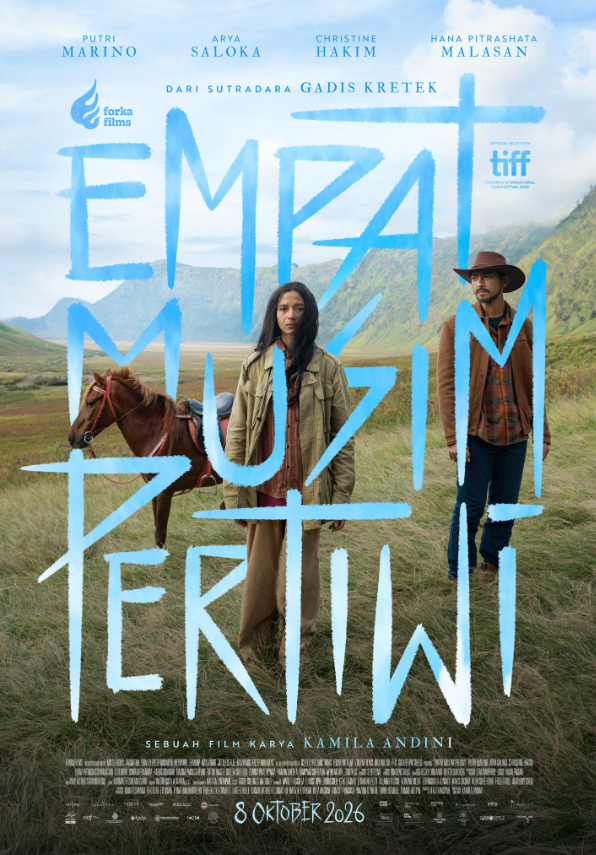
Four Seasons in Java
⭐️⭐️⭐️⭐️⭐️
Feature Film (Narrative)
Film Production Companies: Forka Films, Miles Films, Jagartha, Trinity
Entertainment, Teamup Circular Creative, Imajinari and Navvaros
Rating: NR / Run Time: 137 minutes
Language: Indonesian with English subtitles
Director: Kamila Andini
Writer: Kamila Andini
Starring: Putri Marino, Arya Saloka, Christine Hakim, Hana Malasan, Iswadi Pratama, Hargi Sundarim, Nagra Kautsar Pakusadewo, Totos Rasiti, Shofia Shireen, Dwika Pradyana, Hanna Aretha, Maryan Supraba, Ayub Antah, Stepgania Shakila Cornelia, Donikus Indarto, Cut Mini Theo and Gondo
“Everything is still the way it was.”
Pertiwi (Marino) returns to her village after spending 20 years in prison for killing a boy who sexually assaulted her. She claimed the killing was self-defense, but no one believed her, and her return is met with hostility from much of the community, including the mother of the boy she killed. The one person who seems genuinely happy to see her is Mak Ira (Hakim), a former brothel owner who now runs a diner on the outskirts of the village. As Pertiwi tries to figure out where she belongs, she is forced to confront a past that the village would rather leave buried.
Pertiwi finds some support from Mr. Tri (Gondo), who gives her a place to stay, and Kuntet (Pradnyana), a childhood friend who she frees after finding him locked up for attacking people. She also meets Raras (Aretha), a deaf teenage girl who becomes increasingly important to her. Slowly, Pertiwi begins to build a found family among the people living on the outskirts of the village, those who don't quite fit into its political and social structure. It becomes one of the film's most affecting elements because Pertiwi returns home having been rejected by almost everyone, only to find a community among others who have also been pushed aside.
At the same time, there is something much bigger happening beneath the surface. The village is dealing with inconsistent electricity, and Pertiwi decides to use her scientific abilities to build a solar power generator with Kuntet. Meanwhile, the village's political structure brings more of Pertiwi's past to the surface, including connections to the people responsible for what happened to her. Kamila Andini's screenplay is deliberately patient in revealing these connections. Rather than explaining everything at once, the film keeps adding another piece to the puzzle, gradually showing us how deeply Pertiwi's past is connected to the people around her.
That slow burn is one of the film's greatest strengths. At 137 minutes, Four Seasons in Java is not a quick watch, but the length feels earned because Andini trusts the audience to follow the story as it unfolds. Just when you think you understand a character or situation, another detail changes how you see it. There are several moments when the revelations genuinely land with a jolt, and because the film has taken its time getting there, they don't feel like cheap twists. It becomes a carefully constructed web of relationships, secrets and trauma.
The film also introduces a fascinating science-fiction and supernatural element. While staying in an old house filled with radios and other equipment, Pertiwi begins hearing voices connected to the past, and she periodically sees a strange tree-like creature following her through the forest. The film never makes it entirely clear whether these things are literally happening or whether they are manifestations of what Pertiwi is trying to process. That ambiguity becomes even more interesting when Raras experiences something similar after she is attacked. The creature begins to feel less like a traditional monster and more like a physical representation of the trauma these women are carrying.
Putri Marino gives a remarkable performance as Pertiwi. For much of the film, she maintains an almost constant restraint, rarely allowing her emotions to completely surface. That choice works beautifully because we're constantly watching her interact with people from her past without knowing exactly what she is thinking or what she knows. As the layers of the story are peeled back, Marino gives us just enough to keep us locked into Pertiwi's journey. Her restraint makes the moments when the emotion finally breaks through—and the revelations surrounding her past—hit that much harder.
The visual and sonic elements add another layer to the experience. Batara Goempar's cinematography captures both the beauty of the Indonesian landscape and the increasingly dangerous feeling within the village and its surroundings. The film can move from expansive natural beauty to something much more claustrophobic as the thriller elements develop. Ricky Lionardi and Bottlesmoker's score is equally effective, often leaning into electronic and almost techno-like sounds that give the film an unexpected energy. Together, the music and imagery help make Four Seasons in Java feel as much like a mood as a mystery.
Andini has created a film that refuses to settle into one genre. It is a slow-burn suspense drama, a story of trauma and survival, a political mystery, a supernatural tale and, at its heart, a story about a woman trying to reclaim her life after being defined by what happened to her. The pieces could easily have overwhelmed one another, but the deliberate pacing allows them to build on each other until the film's various threads begin to connect. All in all, Four Seasons in Java is a gripping and beautifully crafted slow burn that turns one woman's return home into an atmospheric story of trauma, revenge and found family.
Review by Cinephile Mike
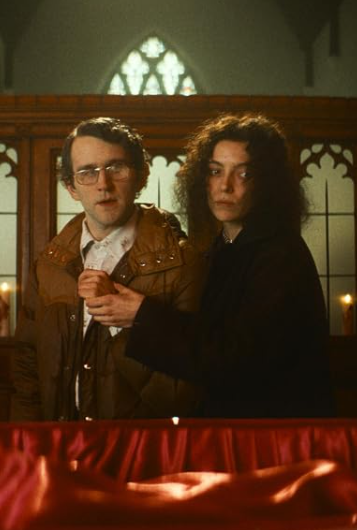
Head to Head
⭐️⭐️⭐️⭐️
Feature Film (Narrative)
Film Production Company: Dream Lab Films
Rating: NR / Run Time: 80 minutes
Language: Persian with English subtitles
Director: Ghasideh Golmakani
Writer: Ghasideh Golmakani
Starring: Mehrnoosh Satari, Saeed Naderi, Ebrahim Azizi, Amir
Hajimohammadi, Reza Mohseni, Saman Mazloomi and Lili Farhadpour
“Some choices don’t come with a return policy.”
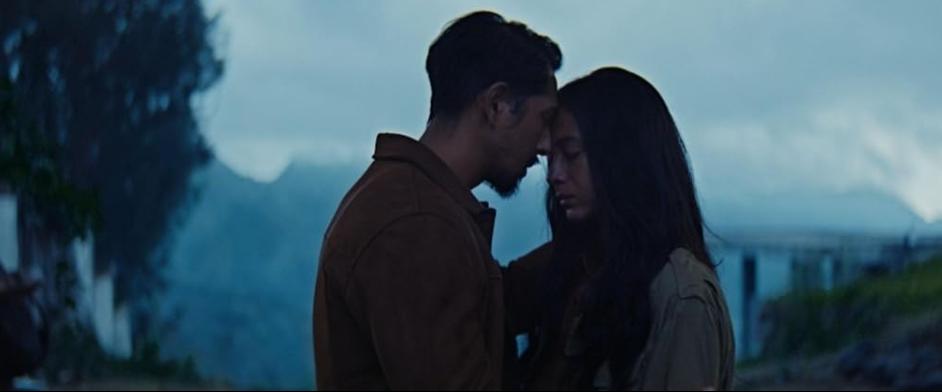
Bahar (Satari) is an acclaimed Iranian filmmaker who is preparing her latest film with a group of male actors. The catch is that she has cast them as women, requiring them to wear dresses and headscarves while recreating scenes from Iranian cinema. The men quickly discover that wearing the clothes is considerably more difficult than they expected. Walking, sitting and even performing simple movements suddenly become complicated, and their frustration only grows as Bahar repeatedly corrects them. For her, they are experiencing a small taste of what women have to deal with every day.
The actors are also hoping the film will lead to an international career, with some of them even seeing it as a possible way out of the country. Sina (Naderi) is particularly resistant to the process, even though he needs the job to work out because he is waiting on a visa. His loud, outspoken personality is nicely contrasted with Nima (Hajimohammadi), who barely says a word and seems almost invisible within the group. Watching the two of them react so differently to the same circumstances gives the satire another layer, particularly as the men gradually realize just how restrictive the clothing and expectations they are being asked to adopt can be. As this is all occurring, Bahar has Ebi (Azizi) capturing everything behind the scenes.
Then censorship catches up with them. When officials arrive at the estate, only Bahar, Sina, Ebi and Nima manage to escape. Suddenly, the film they have been making becomes a film they have to figure out how to finish while on the run. Their escape takes them into a van, onto the road and eventually into the desert, where they have to deal with ordinary people while trying to stay ahead of the authorities. There is an almost cinéma vérité quality to these scenes that makes the situation feel increasingly immediate. Rather than losing interest once they leave the controlled environment of the estate, I actually became more invested because I wanted to see how they were going to complete the film.
Ghasideh Golmakani's use of a film-within-a-film-within-a-film structure is particularly clever. We aren't simply watching Bahar make a movie; we're watching the actors make that movie while Ebi is also capturing behind-the-scenes footage of what is happening. At one point, Bahar watches that footage back, allowing us to see the same events from yet another perspective. Even conversations during lunch and dinner become part of the material being documented. The layers aren't simply a stylistic trick. They allow Golmakani to examine who is controlling the story, who is being watched and what happens when the people behind the camera become part of the story themselves.
Satari is terrific as Bahar, bringing an authority to the character that immediately establishes her as someone who knows exactly what she wants. But there is much more beneath that confidence. As the film progresses, Bahar reveals more about her own experiences, including what happened when she was arrested and how her former husband responded. There is a particularly powerful moment when her frustration finally erupts in a way that feels much larger than the immediate situation. For a moment, it feels as though Bahar is expressing the anger and exhaustion of women who have spent years being told how they are supposed to dress, behave and exist. The complicated relationship between Bahar and her ex-husband also takes on another dimension because they are both filmmakers, adding a competitive element to their personal history.
The production design works beautifully with the story. The luxurious estate where much of the filming takes place suggests a level of freedom and privilege that contrasts sharply with the secrecy surrounding the production. Once the characters leave that enclosed world, the visual environment changes with them, and the film begins to feel less controlled. Amin Jafari's cinematography contributes to that shift, maintaining an observational quality that occasionally blurs the line between documentary and narrative. It reminded me at times of the immediacy I experienced watching It Was Just an Accident, particularly in the way the characters have to interact with people around them while simply trying to figure out what to do next.
What makes Head to Head work beyond its Iranian setting is the way its central joke keeps revealing something larger. Watching these men struggle to walk, sit and move in clothing they aren't accustomed to is funny in an understated, absurd way, but the joke also makes the audience think about the restrictions women can experience every day. The film's critique of the film industry and the expectations placed on women within it is specific, but the underlying questions about power, gender and who gets to control a woman's image reach beyond the world of Iranian cinema. Golmakani never needs to turn the film into a lecture; she lets the absurdity of the situation make the point for her.
The ending left me both frustrated and hopeful, which I think is appropriate for a film so interested in uncertainty. Golmakani doesn't tie everything up neatly, and instead leaves us wondering what might happen next. After spending the film watching Bahar and her actors fight to maintain control of their story, that ambiguity feels less like a missing answer than another question being handed to the audience. All in all, Head to Head is a clever and entertaining satire that uses absurdity to expose some very real inequalities.
Review by Cinephile Mike
Once Upon a Time in Harlem
⭐️⭐️⭐️⭐️⭐️
Feature Film (Documentary)
Film Production Company: William Greaves Productions
Rating: NR / Run Time: 100 minutes
Language: English
Director(s): David Greaves, Liani Greaves and William Greaves
Writer: William Greaves
Featuring: Romare Bearden, Arna Bontemps, Ernest Crichlow, Ida Mae Cullen,
Aaron Douglas, Richard B. Moore, Richard Bruce Nugent, Louise Thompson Patterson,
Noble Sissle, James Van Der Zee and Leigh Whipper
“The Renaissance will never end.”
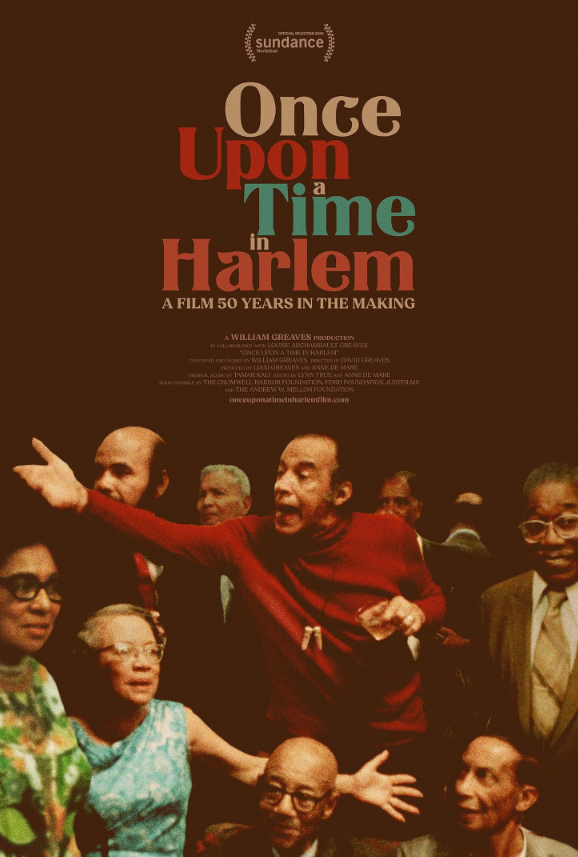
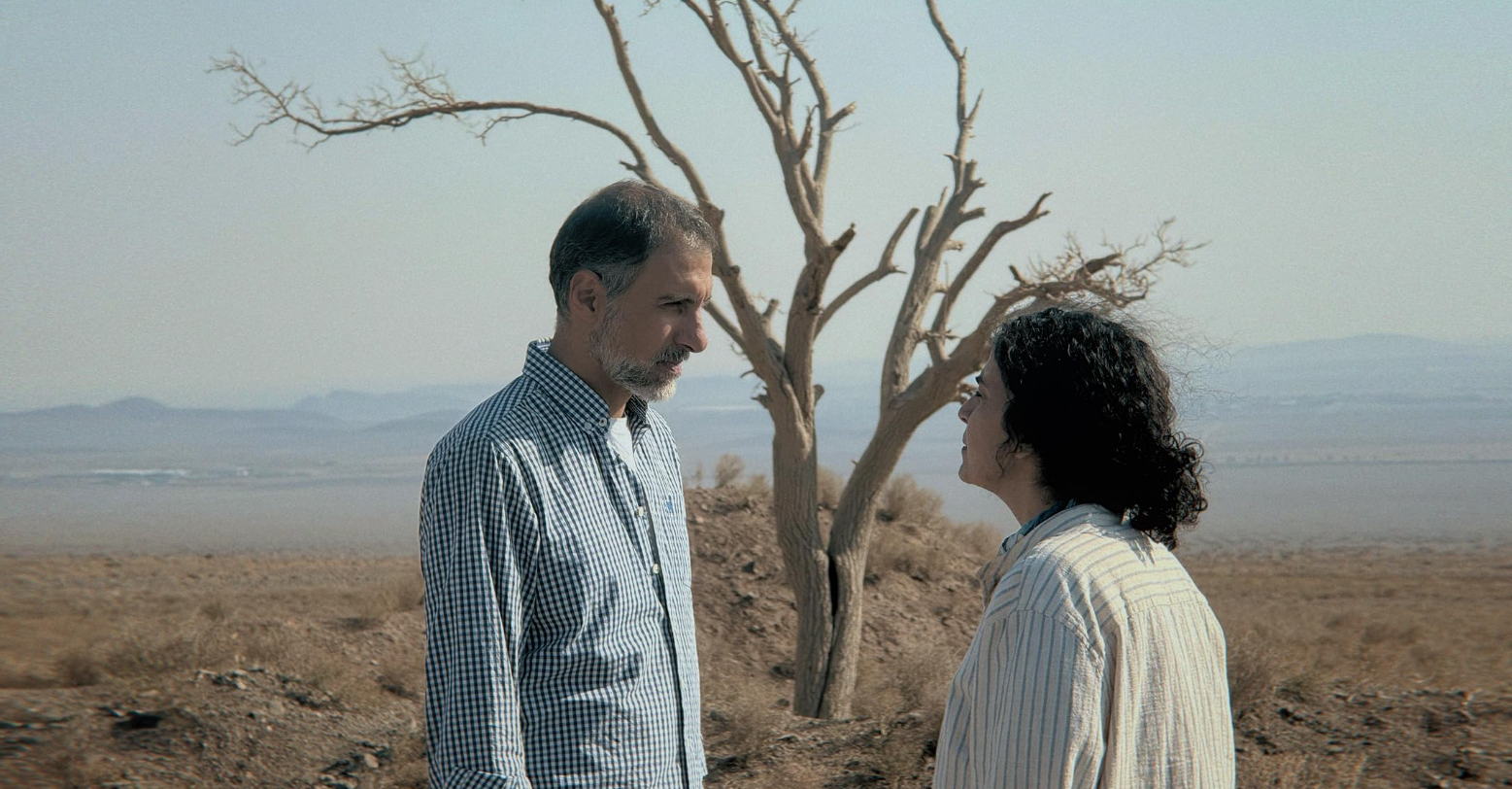
In August 1972, filmmaker William Greaves sent an invitation that sounds almost too good to be true: a cocktail party at the home of Duke Ellington, bringing together “the living luminaries of the Harlem Renaissance.” More than 50 years later, that invitation becomes the doorway into Once Upon a Time in Harlem, a remarkable documentary assembled from footage captured by Greaves in the 1970s and directed by David Greaves, Liani Greaves and William Greaves. From the moment we enter Ellington’s apartment and begin meeting the artists, intellectuals and cultural figures gathered there, the film feels less like a conventional documentary and more like being given permission to quietly sit in the corner and listen.
That intimacy is perhaps the film’s greatest strength. Greaves moves through the apartment as conversations unfold in the kitchen, living room and sitting room, occasionally moving into more formal interviews in other rooms. We encounter theater producers, composers, writers, librarians, publishers and founders of organizations that would continue to shape Black culture. Rather than presenting these figures as historical artifacts, Greaves captures them as people simply existing together, sharing ideas, telling stories and enjoying one another's company.
And they don't always agree. One of the most refreshing things about Once Upon a Time in Harlem is that these artists and intellectuals are perfectly willing to challenge one another when they disagree, but the disagreements never feel like personal attacks. Someone makes a point, another person pushes back, and the conversation continues. It gives the gathering the feeling of a genuine salon rather than a staged celebration of the past. Among the topics, they discuss the Silent Protest Parade of 1917, the influence of W.E.B. Du Bois, the importance of publications including The Crisis, The Messenger and Opportunity, and the changing political involvement of Black Americans across party lines.
Those political conversations were particularly striking because of the distance between when this footage was captured and when we are finally seeing it. The film becomes a fascinating conversation between different moments in history, allowing these figures to discuss the political and cultural landscape of their time while inevitably making us consider our own. There is a sense of how much has changed in the decades since these conversations were recorded, but also how many of the questions being debated remain recognizable. The film doesn't need to tell us that history repeats itself; simply allowing these voices to speak makes the connection apparent.
The film also gives us plenty beyond the conversations themselves. Anne de Mare and Lynn True's editing moves between the gathering, archival news footage, photographs, magazine covers, poetry readings, theatrical performances and voice-over. It could easily have felt like too much material, but it comes together naturally. We don't know exactly how long this gathering lasted, but the editing makes it feel almost endless—in the best possible way—as though these people could have been talking for days.
What makes the experience so special is how intimate it feels. At times, you almost feel like you shouldn't be hearing some of these conversations. These are people discussing art, politics, history and one another with a level of openness that makes you forget you're watching footage from more than five decades ago. You wish you could grab a glass of wine, pull up a chair and just soak it all in.
And then there is the fact that we're only seeing this now. Footage captured in the 1970s has been preserved and shaped into a film that allows a new audience to meet these people, hear their voices and understand the conversations they were having. When Ida Mae Cullen speaks about the importance of Greaves doing this work and bringing this history to people, it feels especially meaningful because that's exactly what the film is doing.
Once Upon a Time in Harlem doesn't simply give us a history lesson about the Harlem Renaissance; it lets us spend time with the people who carried its ideas forward, and it captures them as artists and thinkers who could debate, disagree, laugh and challenge one another. All in all, Once Upon a Time in Harlem is an extraordinary time capsule that brings the people and conversations of the Harlem Renaissance into the present and reminds us that the Renaissance will never end.
Review by Cinephile Mike
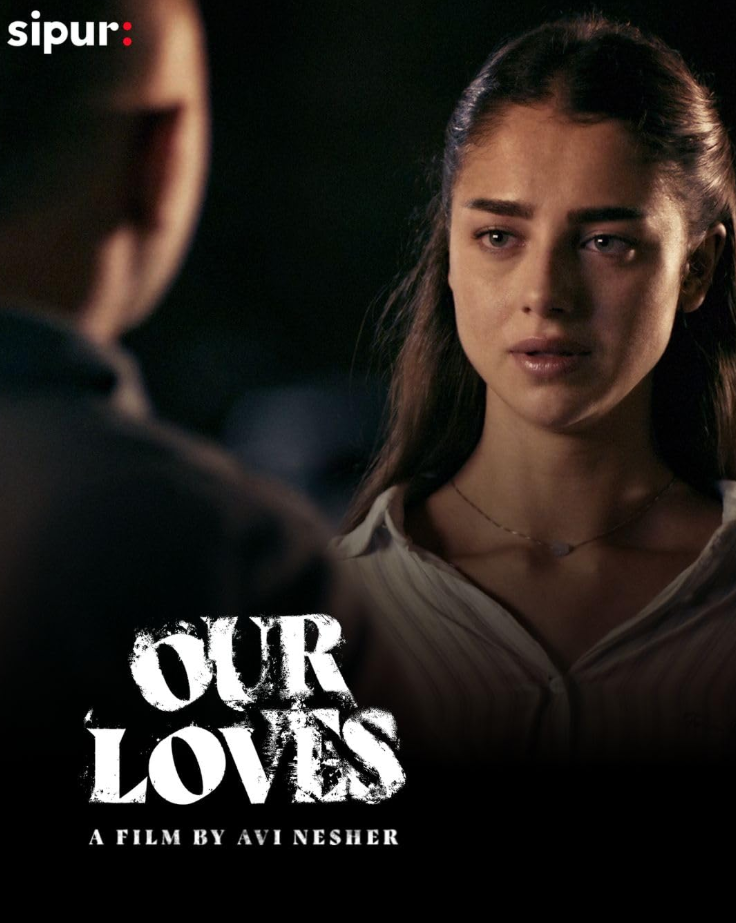
Our Loves
⭐️⭐️⭐️⭐️
Feature Film (Narrative)
Film Production Companies: Access Entertainment, Artomas Communications,
Fox Entertainment Studios, Moriah Media, Sipur Studios and United King Films
Rating: NR / Run Time: 114 minutes
Language: Hebrew and Arabic with English subtitles
Director: Avi Nesher
Writer: Avi Nesher
Starring: Shalom Michaelshvili, Magi Azarzar, Yaniv Biton, Lena Fraifeld, Lior Miller, Nevo Katan, Noa Cohen, Chancela Mongoza, Hadas Yaron, Evelin Hagoel, Leib Levin and Daniel Gimpel
“Sometimes you don’t know how good you have it until you lose it.”
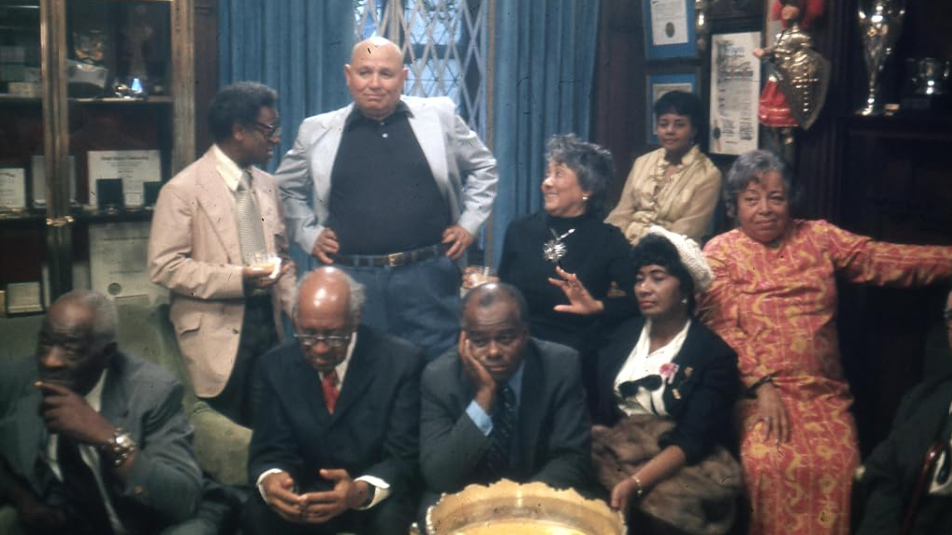
On October 5, 2023, a group of strangers are simply living their lives. Matan (Katan) is working as a sound technician while dealing with an increasingly unhappy relationship with his father. Liri (Cohen), who lives with Matan in a kibbutz, is struggling with her own fractured relationship with her father. Sapir (Gimpel) is reeling from yet another broken engagement, while Nisso (Biton) and his partner are expecting a child and considering a move to Strasbourg. Elsewhere, police officer Mili (Azarzar) is trying to keep her relationship with Sandra (Yaron) private, even as Sandra wants something more from their future. These stories don't initially seem to have much to do with one another, but Avi Nesher slowly begins connecting the dots.
Then October 7 arrives.
As Israel comes under attack, these individual stories, and more, suddenly take on a very different meaning. The film doesn't simply abandon its characters to focus on the larger tragedy; instead, the attack becomes the force that brings their separate worlds crashing together. People who were worrying about relationships, family, money, careers and the future are suddenly trying to survive. Some characters find themselves forced into roles they never expected to play, while others discover just how much they depend on people they may barely have known.
What I found particularly effective is how Nesher builds tension through what we don't see. The film certainly contains striking and disturbing images of the attacks, but some of its most effective moments come when we hear the bullets, screams and chaos without immediately seeing their source. That decision makes the danger feel even more immediate because, like the characters, we don't know what is coming next. The sound design by Ronan Nagel is especially effective here, creating an almost physical sense of unease as the situation continues to deteriorate.
The ensemble is also remarkably strong. There isn't a weak performance in the group, and the naturalistic dialogue often makes these characters feel like people we could actually encounter rather than pieces being moved around a screenplay. Nesher gives each of them enough personal history that when their stories begin intersecting, the connections feel earned. Even when the film makes a predictable move, I was invested enough in these people for it to land.
Amit Yasur's cinematography gives the film an appropriately unsettled visual language, moving between intimacy and chaos as the characters' circumstances change. Isaac Sehayek's editing has the difficult job of keeping all these stories moving without losing track of the people at their center, while Tom Oren's score and the original songs by Nunu add another emotional layer. The music isn't simply there to tell us how to feel; it helps maintain the sense that these people had lives, dreams and relationships before everything changed.
And beneath all of the tragedy, Our Loves is ultimately a film about connection. It is about families that are fractured, relationships that are complicated, people who want more from their lives and strangers who suddenly become important to one another. Yes, the film can be heavy-handed at times, and at nearly two hours, there are moments when you feel the length. But I was invested enough in these characters that even the predictable turns felt earned. All in all, Our Loves is a powerful reminder of how quickly life can change and how much we depend on one another when it does.
Review by Cinephile Mike
Stuffed
⭐️⭐️⭐️
Feature Film (Narrative)
Film Production Companies: Agile Films, BFI Film Fund, British Film Institute,
Calculus Media, Ffilm Cymru Wales and Fresh Fish Films
Rating: NR / Run Time: 117 minutes
Language: English
Director: Theo Rhys
Writer: Joss Holden-Rea and Theo Rhys
Starring: Jodie Comer, Harry Melling, Claire Novelli, Jonathan Aris, Sian Gibson, Joshua Griffin and Robert Goodman
“Why should death mean ceasing to exist?”
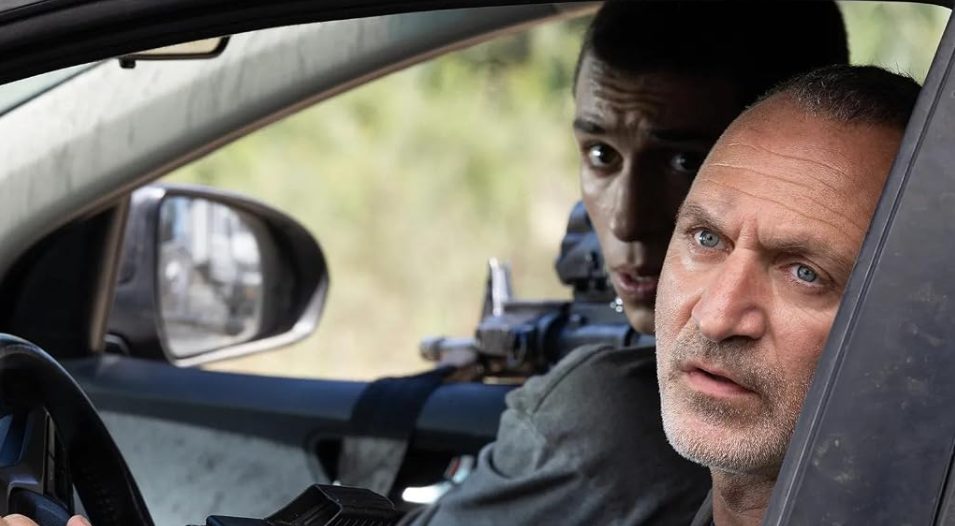
Bernie Marshall (Melling) is a loner. He spends his days making cheese sandwiches at a sandwich factory, visiting his mother Maggie (Novelli) in a nursing home as she struggles with dementia, and escaping into his favorite television program, Everyday Stories, Extraordinary Lives. There isn't anything particularly remarkable about Bernie, and that's exactly what bothers him. He wants to be more than a man sitting around his house in his underwear, waiting for life to happen.
Then he sees an advertisement asking a very simple question: “Do you want to be exceptional?” His response brings him into the world of Araminta (Jodie Comer), an eccentric woman who has been searching for the perfect subject for a rather unusual art project. Surrounded by taxidermied animals and drawings of human cadavers, Araminta has decided that she wants Bernie to become something that has never quite been done before: a piece of human taxidermy. And, for reasons that make increasingly bizarre sense, Bernie agrees.
As Bernie watches his mother gradually lose the ability to recognize him, the idea of leaving something behind begins to take on greater importance. He and Araminta start closing the chapters of his life one by one, from quitting his job to cleaning out his home and eventually staging his own death. What initially seems like a strange business arrangement between two people who have little in common gradually becomes something more complicated as feelings begin to develop and their carefully planned future starts to become less predictable.
Stuffed is one of those movies where the best response may simply be to sit back and enjoy how completely bonkers it is. There is a definite Sweeney Todd influence in the macabre visuals and musical numbers, while the story itself has a strange Frankenstein-like quality. Joss Holden-Rea's songs give the film an unexpected theatricality, and while I don't know that you'll necessarily leave the theater humming every number, the sheer grandiosity of some of the sequences makes them a lot of fun. This is a movie that absolutely did not need to be a musical, which is probably part of why I enjoyed the fact that it is one.
Melling and Comer also turn out to be surprisingly gifted singers, with both having voices that suit the darkly comic material. Their performances help sell the increasingly strange relationship between Bernie and Araminta, even when the film is asking us to accept some pretty outrageous developments. The costume and production design have just as much fun with the material. Araminta looks like she wandered out of a collision between Lydia Deetz and Wednesday Addams, while the delightfully dated 1970s pink velour suit for Bernie becomes almost a character of its own. Everywhere you look, there is another bizarre detail waiting to be noticed.
There are plenty of clever moments that had me laughing uncomfortably, particularly when the film takes something that should be disturbing and finds the absurdity hiding inside it. It does play into some predictable turns, but it also subverts enough expectations to keep you wondering where all of this is going. The nearly two-hour runtime does occasionally make the film feel longer than it needs to be, but there is enough going on visually and tonally to keep the strange little fever dream moving.
What ultimately makes Stuffed work for me is that underneath all the taxidermy, musical numbers and macabre humor is a surprisingly tender story about two lost and lonely people who find something in each other that neither knew they were missing. Bernie wants to be remembered, while Araminta wants to create something that will last, and their unusual arrangement gives both of them a sense of purpose. All in all, Stuffed is a wonderfully weird and darkly funny musical fever dream that may just have the makings of a future cult favorite.
Review by Cinephile Mike
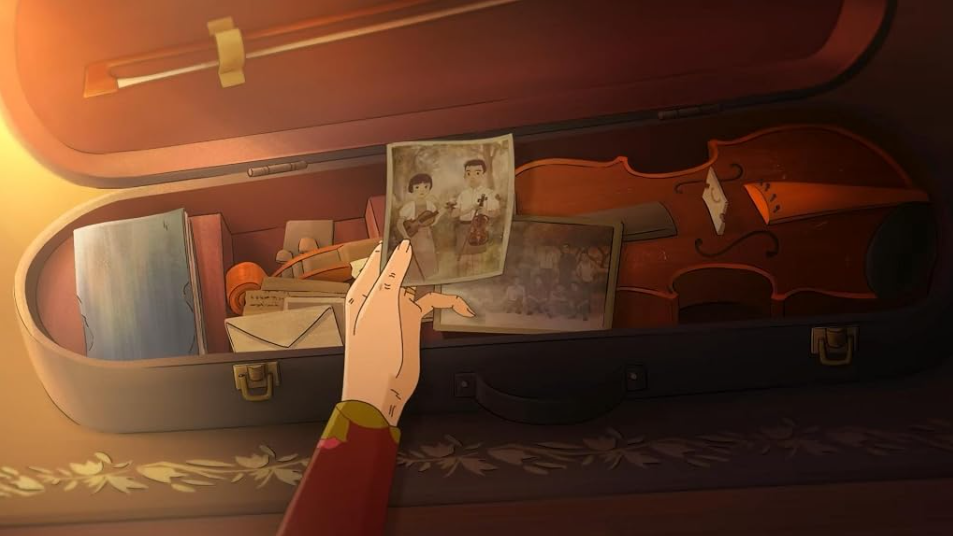
The Violinist
⭐️⭐️⭐️⭐️⭐️
Feature Film (Narrative - Animated)
Film Production Companies: Robot Playground Media, Altri Occhi, Bombillo
Amarillo, Little Green White, Mystic House, TV ON Producciones and Throne
Rating: NR / Run Time: 100 minutes
Language: English and Japanese with English subtitles
Director(s): Raul Garcia and Ervin Han
Writer: Ervin Han and Jordan Katherine See
Starring: Enrique Arce, Kheng Hua Tan, Kazuya Tanabe, Ayden Sng, Adrian Pang, Sachi Hayashi, Fang Rong Foo, Sachi Kokuryu
“The violin is the closest sound to a human voice.”
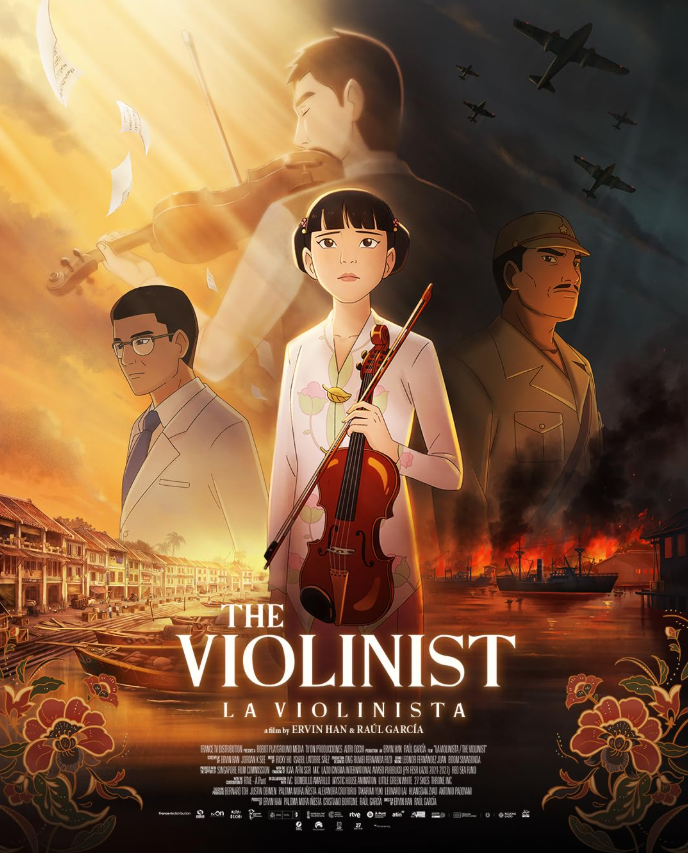
A Spanish journalist named Hugo Fernandez (voiced by Arce) arrives in Singapore to speak with the legendary violinist Madam Lee about a violin she has played for decades. He has been researching her story for years, but one question keeps nagging at him: why has she continued to play the same violin for so long? That question opens the door to The Violinist, which takes us back to 1930s Singapore and the story of Fei and Kai, two young musicians whose lives become intertwined through their love of music. What begins as an investigation into an old instrument gradually becomes a sweeping story of friendship, love, war and loss.
Kai (voiced by Sng) is a gifted young boy who becomes fascinated by Fei's (voiced by Rong) violin playing while staying in her household. After picking up a violin himself, he reveals a remarkable natural ability, hearing things in the music that others don't. When Fei's duet partner becomes ill before a concert, Kai steps in with virtually no preparation and delivers a stunning performance. Businessman Lim Bo Seng (voiced by Pang) hears him play and takes an interest in the young prodigy, eventually giving him a violin and helping Kai and Fei become musical partners. As the years pass, the two grow closer and their performances take them from childhood dreams toward a promising future.
That future changes when war arrives. After Kai's mother is killed during the bombing that accompanies the Japanese invasion of Singapore in 1941, he leaves with Bo Seng and becomes involved with the resistance effort rather than pursuing the musical career that had seemed destined for him. Fei doesn't want him to go, but Kai has always had a fighter in him and feels compelled to do something. Before leaving, he entrusts his violin to Fei, and the film then follows the two as they experience the war from very different places, leaving us wondering whether they will ever find their way back to one another.
What makes The Violinist particularly effective is the way music remains at the center of the story even when the characters are separated from it. The score by Ricky Ho and Isabel Latorre is incredible, moving between haunting and sweeping as the story progresses, while the violin selections themselves are magical. The music doesn't simply accompany the story; it becomes a way of connecting Fei and Kai across the years. When the score swells, you feel yourself being swept along with them, making the emotional moments hit even harder.
The animation is equally impressive. The stunning 2D animation has a refreshing hand-drawn quality, with select scenes taking on the appearance of pencil sketches to help mark the passage of time and illustrate some of the more tragic moments of the war. Yet the film doesn't shy away from the brutality of what is happening. The muted color palette also makes the brighter colors in certain key moments stand out, almost casting a spell over the screen. There is a real sense of scale here, despite the intimacy of the central relationship.
The sound work deserves equal praise. You hear every bullet fired, every note played on the violin and even the smallest details, from rice being thrown to leaves crunching underfoot. Those choices make the world feel remarkably tactile, while also creating an interesting contrast between the beauty of the music and the violence surrounding the characters. The result is an animated film that feels both sweeping and visceral without losing sight of the two people at its center.
There is also something moving about watching these two young people grow from children discovering their musical abilities into adults whose lives are shaped by forces far beyond their control. The film's historical setting gives their story considerable weight, but it never loses the personal connection between Fei and Kai. Even as the world around them changes, the violin remains the one thing that continues to connect them, becoming a reminder of the life they once imagined for themselves.
The Violinist is an ambitious historical epic, and it manages to balance romance, war and music while telling a distinctly Singaporean story. The film's emotional sweep, beautiful animation and extraordinary use of music make it easy to become invested in Fei and Kai's journey, and the framing device gives the story an additional layer of mystery as we gradually understand the significance of that old violin. All in all, The Violinist is a stunning animated epic that uses music to tell a deeply emotional story of love, loss and hope, sweeping you across decades while never losing sight of the two people at its heart.
Review by Cinephile Mike